Jules Antoine Lissajous
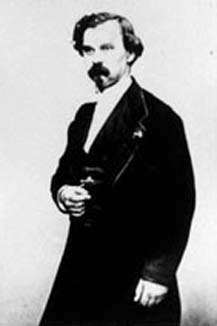
Another French mathematician from the 1800s. Came up with Lissajous Curves, which are parametric plots of two sine waves against each other; one on the x-axis, one on the y-axis.
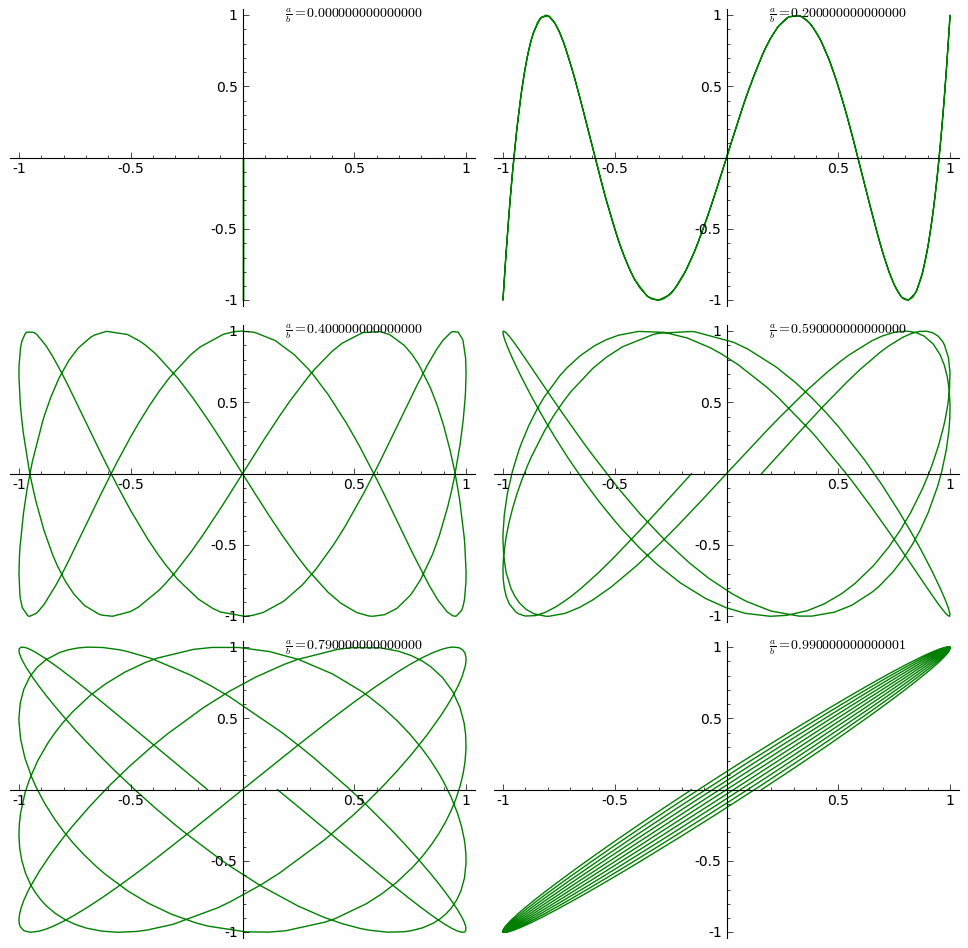
He illustrated these curves using a homemade "Lissajou apparatus"; a device that bounces a beam of light off a mirror attached to a vibrating tuning fork. The beam of light is then reflected again off of a second mirror attached to another tuning fork, perpendicular to the first. Usually the two tuning forks are an interval apart; and the resulting figure traced by the beam of light is a Lissajou curve. Fucking awesome.
a lot of other great stuff came out of this like:
lissajou knots

harmonographs

blackburn pendulums;
a pendulum hung on a "v" shaped string, creating periodic motion in 2 degrees of freedum
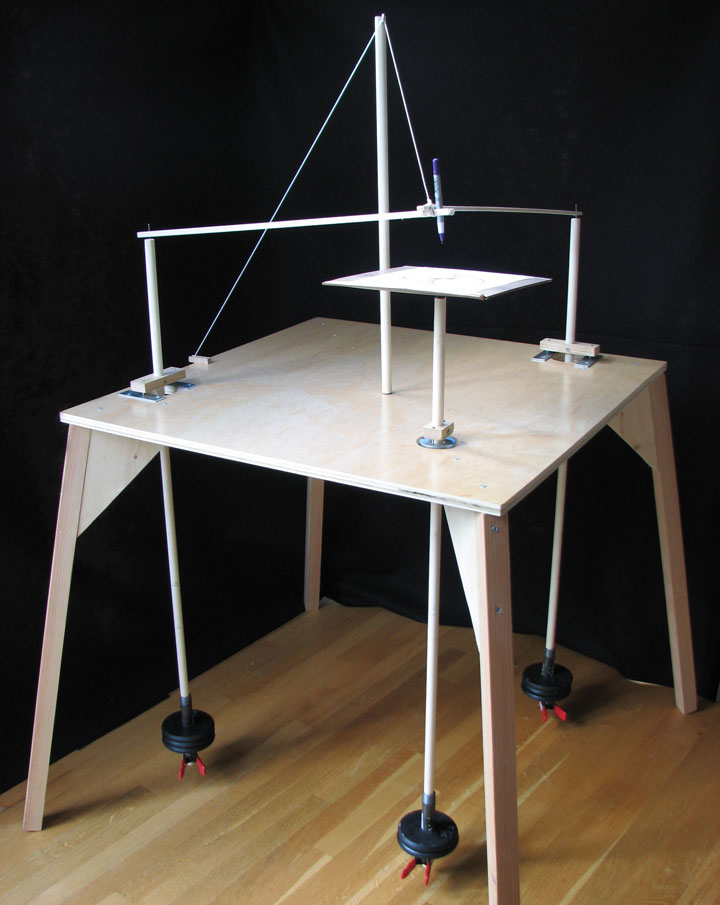
which, incidentally, also traces lissajou curves:
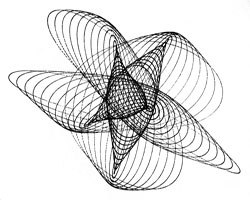
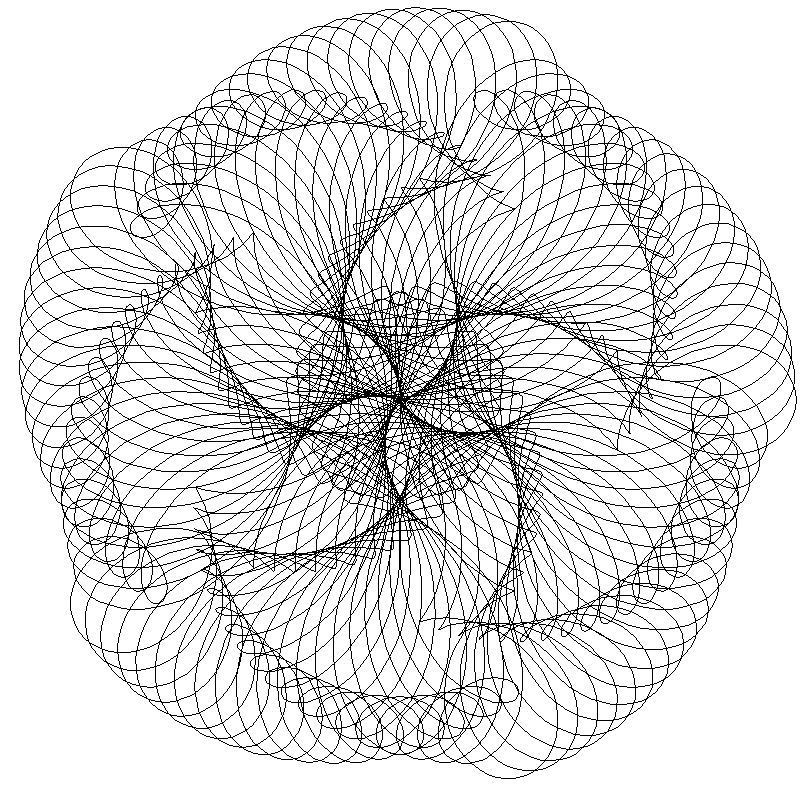
spirographs
Precession as a form of parallel transport

maurer roses

fire poi

also the math seems pretty well developed

p.s. speaking of dreamachines, how great do these look?
pps who can make it first?

http://boingboing.net/2012/03/24/a-pair-of-turntables-that-gene.html
ReplyDelete"A device that draws figures based on a couple of periodic sources running at different multiples of the same frequency (and often a bit out of phase) is a harmonograph. http://en.wikipedia.org/wiki/H... They've got some lovely pendulum powered ones in the science museum in London. In Australia, the logo for the ABC, the government radio and television network, is a Lisajous figure, which is an example of the same." -Steve Taylor
Delete